
Early Wildfire Activity Signals Elevated Risk for Utility Distribution Infrastructure
Recent national reporting has highlighted an emerging trend: wildfire activity is starting earlier and appearing in regions that don’t typically experience early-season fire behavior.
(Source: Washington Post via MSN)
After the lack of a substantial winter in many fire-prone areas this year, experts are alarmed at the increasing wildfire season window in 2026.
For electric utilities, this shift in timing also mean a significant shift in exposure.
Wildfire Risk Is No Longer Seasonal
Historically, wildfire preparation has followed a predictable calendar. Utilities had a defined window to plan, inspect, and harden infrastructure ahead of peak conditions.
That window is changing.
Earlier ignition patterns and expanding geographic risk mean distribution systems may be exposed before traditional mitigation efforts are fully in place.
Why Distribution Infrastructure is Vulnerable
 When ground fires reach energized distribution lines, the risk is immediate and physical. Wooden poles (especially at the ground line) are exposed to:
- Direct flame contact
- Elevated temperatures that accelerate degradation
- Structural weakening that may not be immediately visible
Even when poles do not fail during the fire itself, residual damage can compromise structural integrity, increasing the likelihood of failure under future loading conditions.
The Cost of Reactive Response
When wildfire exposure is addressed after the fact, utilities often face:
- Emergency pole replacements
- Extended outages
- Increased safety exposure for crews
- Unplanned labor and material costs
These outcomes are rarely driven by a single event. They reflect underlying structural exposure that existed before the fire occurred.
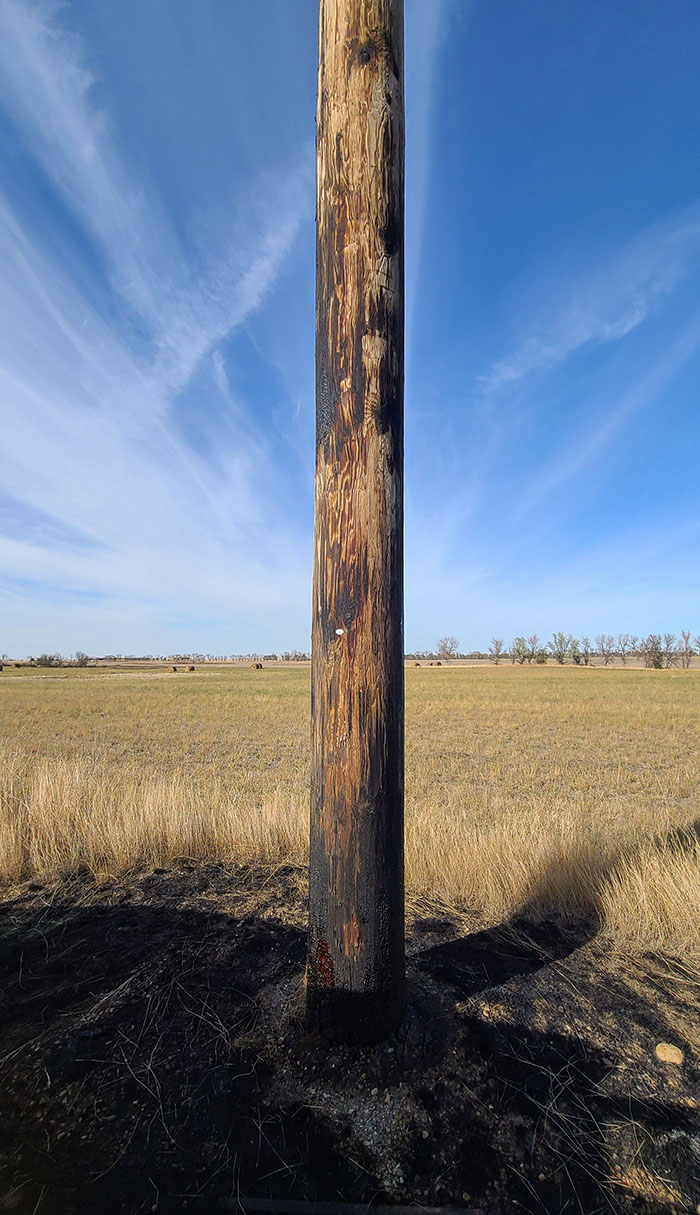
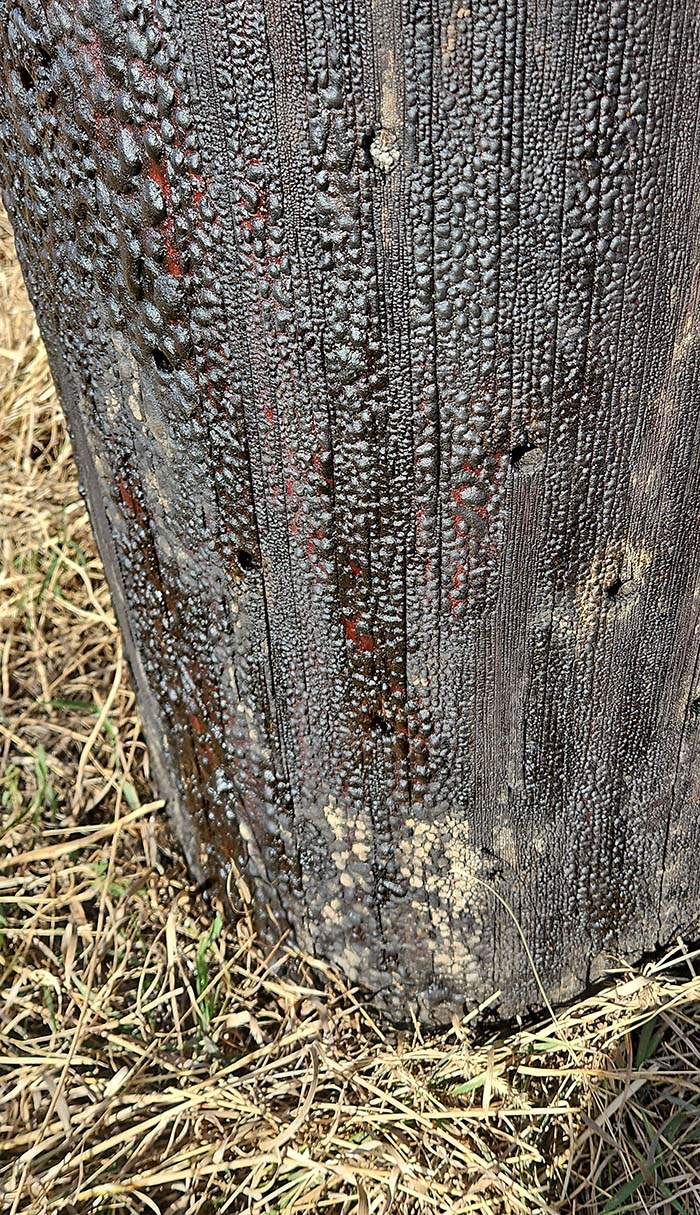
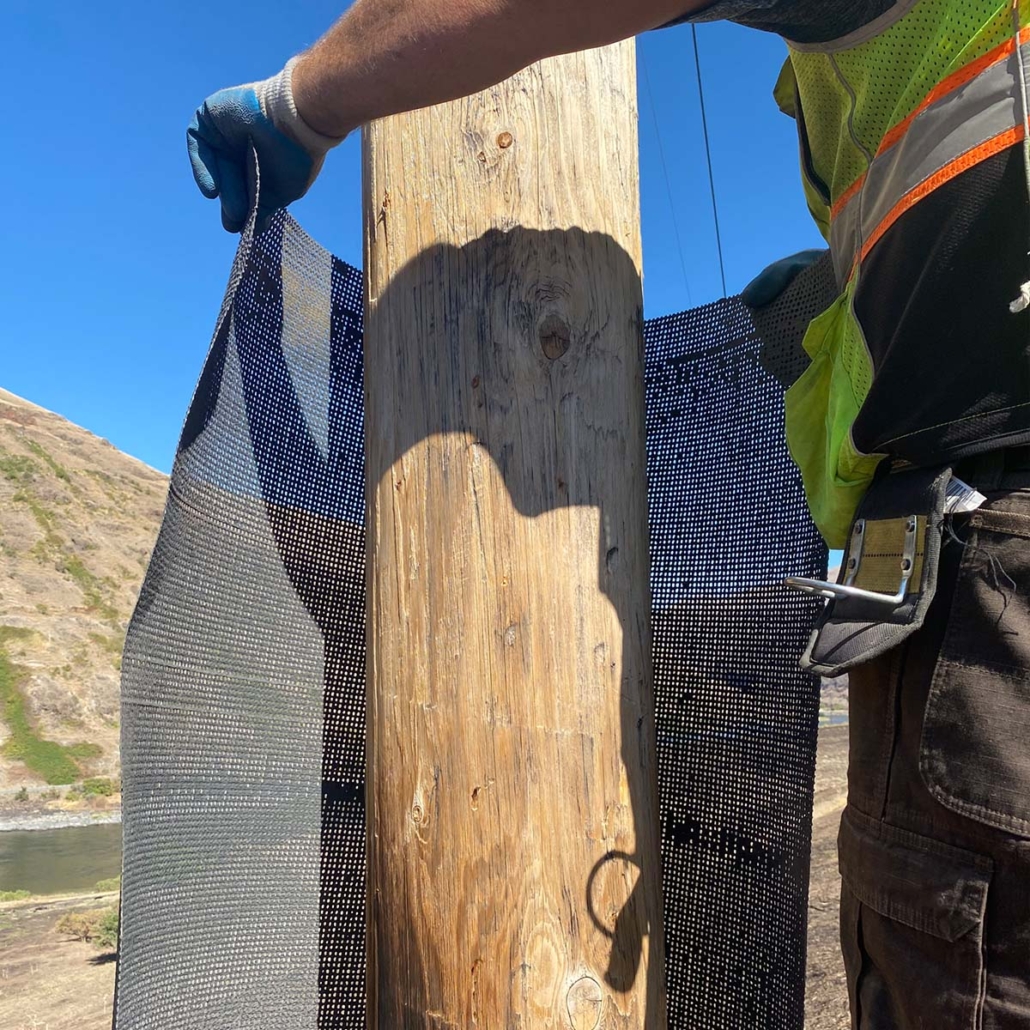
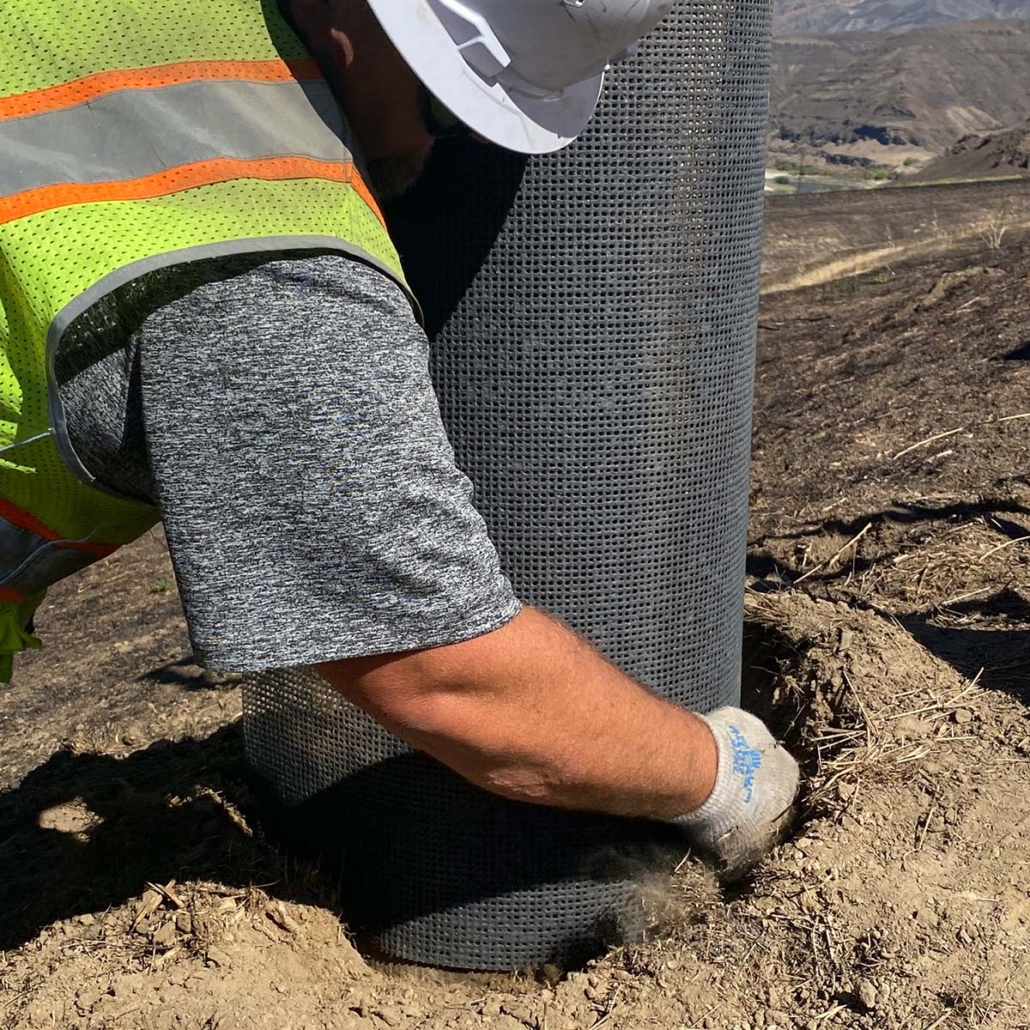
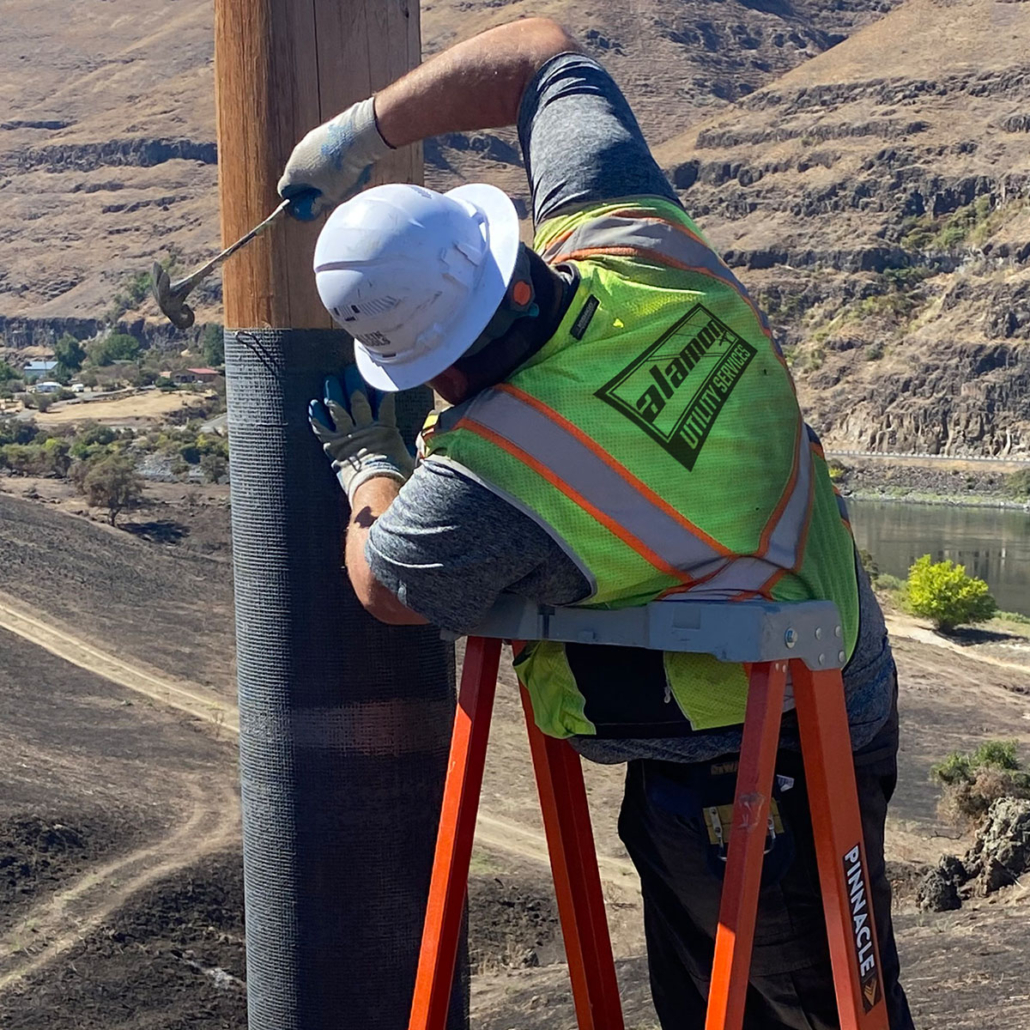
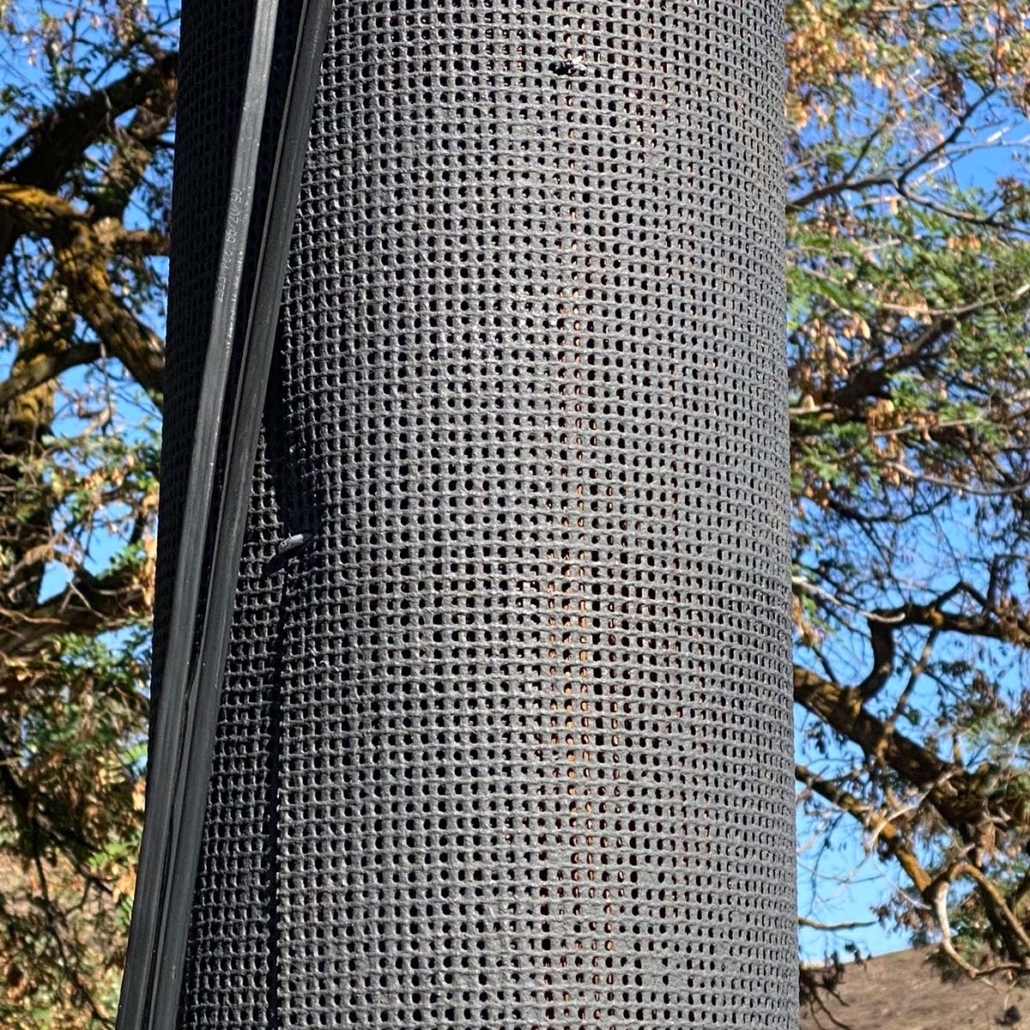
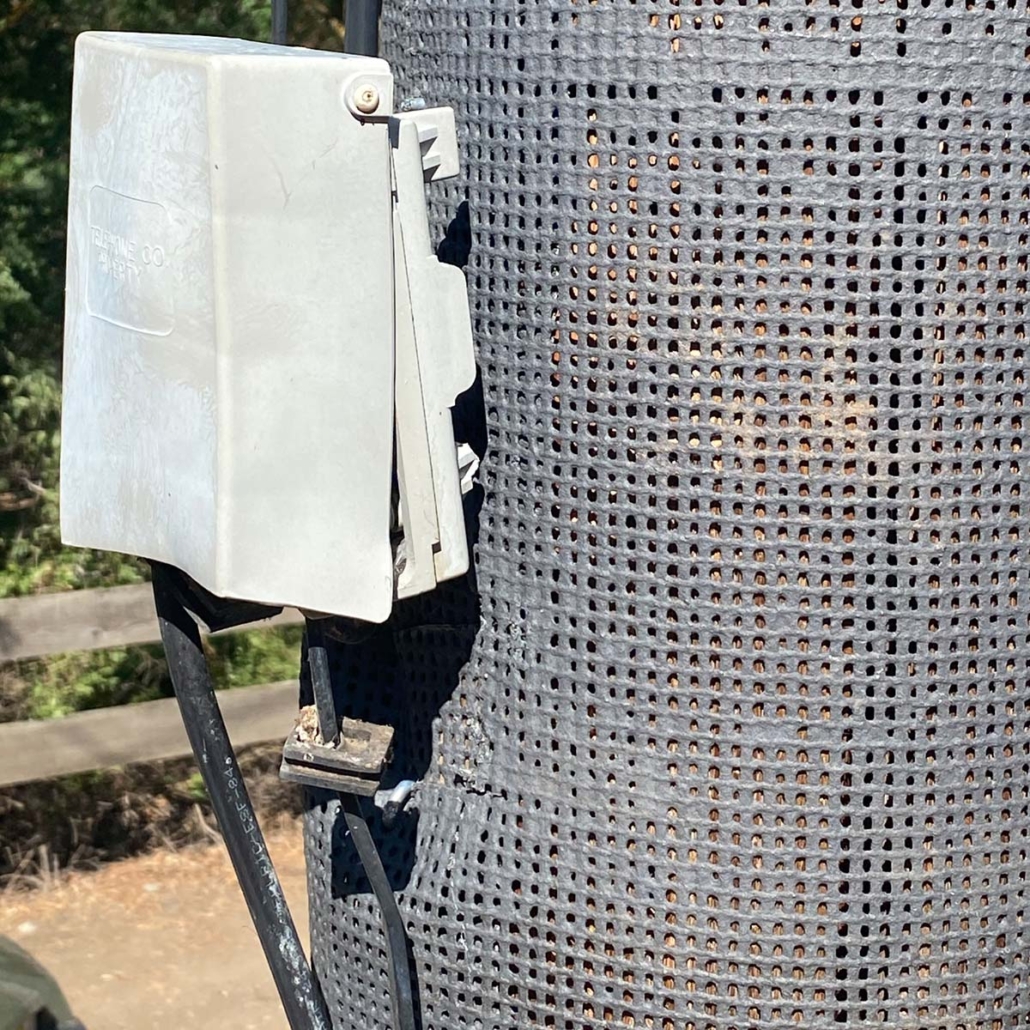
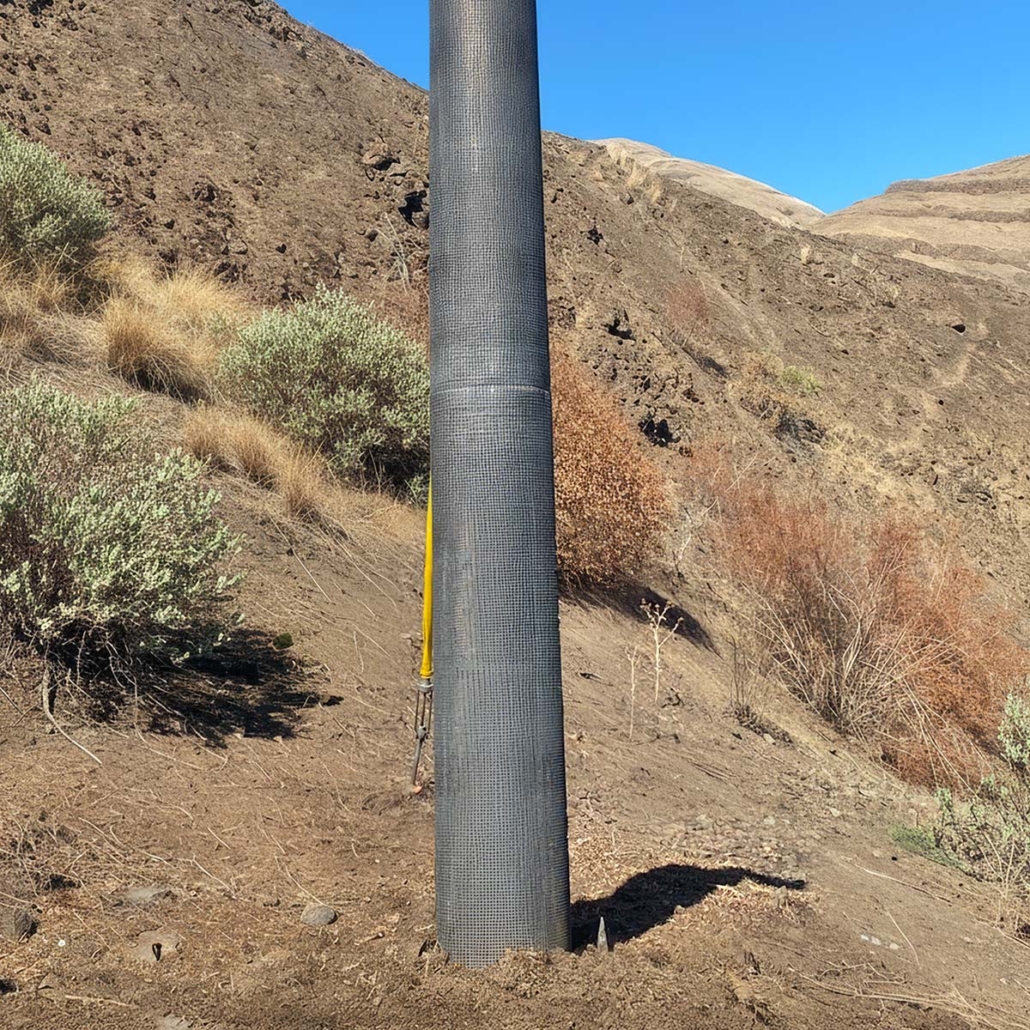
Alamon installs fire wrap / fire mesh engineered fiberglass and resin pole protection systems to help preserve structural integrity during ground fire exposure.
What Prepared Utilities Are Doing Differently
 Utilities that consistently perform well during wildfire events share a common approach: they address vulnerability before exposure. This includes:
- Identifying at-risk segments of distribution systems
- Prioritizing infrastructure based on condition and environment
- Implementing targeted hardening strategies where risk is highest
One increasingly adopted approach is the use of engineered fiberglass and resin pole protection systems referred to as fire wrap or fire mesh designed to help preserve structural integrity during ground fire exposure.
These systems are not a replacement for broader wildfire mitigation strategies—but they are an effective, targeted solution for protecting existing pole infrastructure in high-risk areas.
Preparation Is a Narrowing Window
Wildfire resilience is not built during an event. It’s built in the planning and preparation that happens beforehand.
As wildfire patterns continue to shift, utilities that act early will be better positioned to maintain system integrity, reduce outages, and manage long-term infrastructure costs.
Schedule a Wildfire Hardening Consultation
Be proactive about protecting your distribution infrastructure. Schedule a wildfire hardening consultation with Alamon by calling 1.800.252.8838, ext. 1102 or by using the form below.
"*" indicates required fields