
Why Edge Data Centers Still Need Skilled Field Deployment

Edge data centers are often discussed in terms of speed, proximity, latency, AI, and distributed computing. Without question, moving compute closer to users, devices, facilities, and critical systems can help reduce delay, improve responsiveness, and support applications that depend on fast local processing.

But before any of those benefits materialize, an edge site has to be built.

Edge data centers may be smaller and more distributed than large data center campuses, but they still depend on the physical infrastructure fundamentals that make critical systems work: reliable power, grounding, fiber, structured cabling, equipment installation, backup systems, testing, documentation, and ongoing field support.

In other words, as edge infrastructure emerges as an important technology strategy for cloud and AI computing, it is also a field deployment challenge.
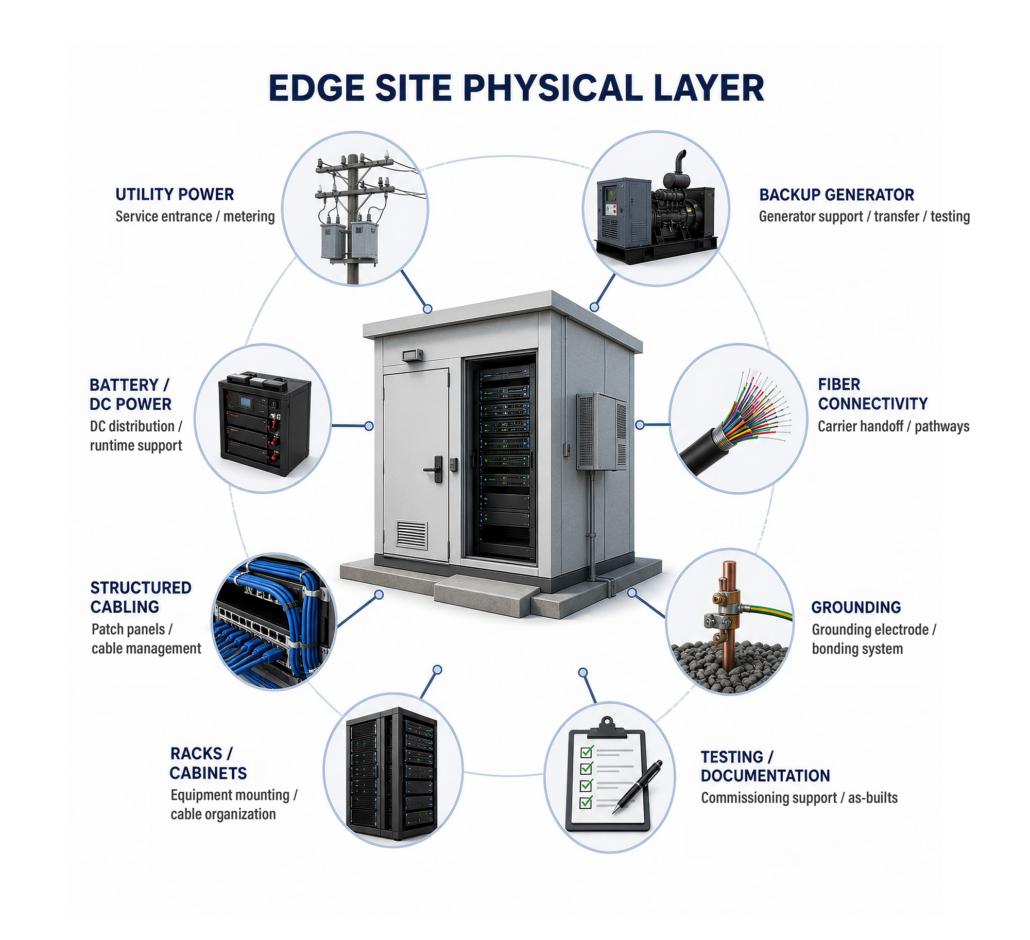
Edge Data Center Site - Physical Layer | Alamon Inc.

Edge Sites Can Be Faster to Deploy, But Site Work Still Matters

One of the common advantages associated with edge data centers is speed. Because edge sites are often smaller than traditional data center facilities, they may be faster to deploy. Modular and prefabricated systems can also help reduce construction complexity by arriving with certain components already engineered, assembled, or integrated.

Edge Data Centers | Alamon Inc.That matters. As demand for data center capacity continues to grow, organizations are seeking ways to move faster without sacrificing reliability.

But the speed of deployment is still determined by who is performing the work, and how consistently the details are executed. A smaller footprint or modular system can reduce certain construction variables, but it does not remove the need for experienced field teams that understand active facilities, critical infrastructure standards, safety requirements, documentation, and the importance of getting the physical layer right.

Power has to be available and properly distributed. Equipment has to be installed. Grounding has to be addressed. Fiber and network connections have to be brought to the right locations. Racks, cabinets, cabling, batteries, backup power systems, monitoring equipment, and other supporting infrastructure have to be integrated into the actual operating environment.

A modular system may help shorten part of the deployment timeline, but the site still has to be ready. Field execution remains the step that connects the design to the real-world environment where the system has to operate.

Edge Data Centers | Alamon, Inc.

Who Benefits From Edge Infrastructure?

Edge data centers can be especially valuable for organizations that need processing closer to users, devices, facilities, or critical systems. That includes telecom operators supporting 5G and mobile edge computing, industrial companies using IoT and automation, utilities and critical infrastructure operators, healthcare systems, content delivery networks, video analytics providers, and other organizations where latency, resiliency, bandwidth, or local processing matter.

The use cases vary, but the physical requirements remain: edge sites still need reliable power, connectivity, grounding, backup systems, equipment installation, testing, documentation, and skilled field deployment.

Mission Critical Experience Matters at the Edge

For Alamon, the edge data center conversation is a natural extension of the critical infrastructure work our field teams have supported for decades.

Alamon’s deepest experience is rooted in communications, power, and network infrastructure environments, including central offices, telecom facilities, equipment rooms, wireless sites, and other active facilities where reliability matters. Alamon has also performed select data center work. For decades, the organization’s core competencies revolve around understanding the physical infrastructure disciplines that data centers, edge sites, and critical communications environments all depend on.

Central offices, telecom facilities, equipment rooms, and data centers are not identical environments. Each has its own standards, operating requirements, customer expectations, and technical considerations. But they share many practical infrastructure needs: power, grounding, fiber connectivity, structured cabling, racks and cabinets, equipment installation, cable management, backup systems, testing, labeling, documentation, and safe work practices in active facilities.

That is the bridge between Alamon’s established field experience and the growing edge data center conversation.

The Physical Layer Determines Reliability

Edge data centers are often associated with advanced use cases such as AI inference, industrial automation, communications networks, utility monitoring, video analytics, and critical infrastructure support. Those applications may sound highly digital, but they still rely on physical systems in the field.

Power distribution, battery systems, backup generators, grounding and bonding, fiber installation, structured cabling, rack and cabinet installation, cable management, labeling, testing, documentation, commissioning support, and preventive maintenance are not minor details. They are the practical foundation that allows digital infrastructure to operate reliably.

A well-built edge site should not only work on the day it is turned up. It should be understandable, serviceable, and supportable months and years later.

Multi-Site Deployment: Raising the Stakes

Edge infrastructure becomes especially challenging when it moves from a single site to a multi-site deployment model.

One site can be handled as a project. Dozens or hundreds of sites require a repeatable process.

That process has to account for scheduling, labor availability, material coordination, safety requirements, site access, customer standards, quality control, documentation, closeout packages, and communication between field teams and project stakeholders.

Small inconsistencies can become large problems when they are repeated across many locations.

That is why field execution is such an important part of the edge data center conversation. The promise of distributed infrastructure depends on the ability to deploy distributed infrastructure correctly.

For companies planning edge deployments, the question is not only, “What technology do we need?” It is also, “Who can help us get this work done across real sites, with real constraints, in a repeatable way?”

Alamon DC Power Services

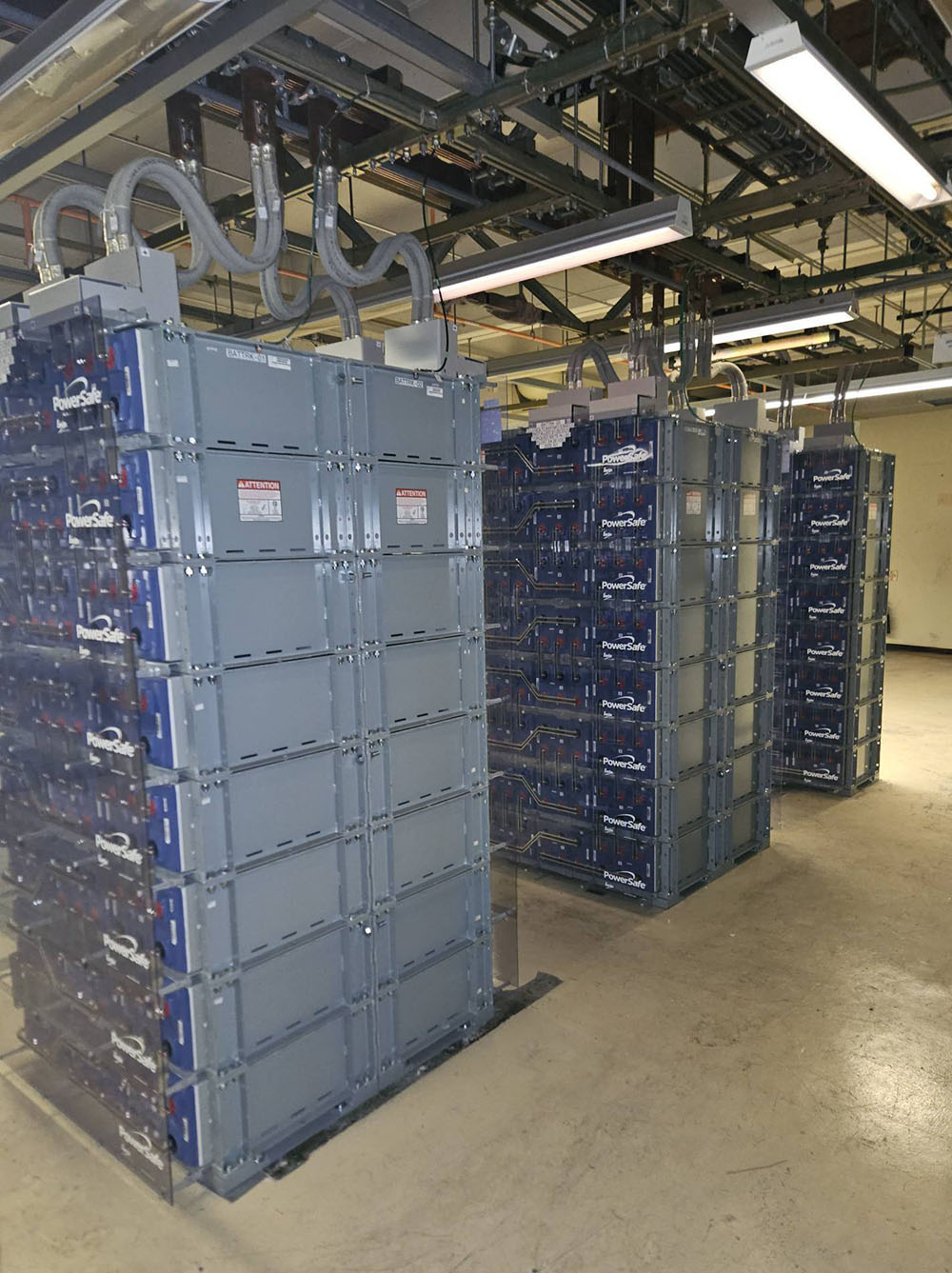
Backup battery systems in critical communications environments support the same reliability-focused field disciplines required in distributed edge infrastructure.

Fiber Testing | Alamon Inc.

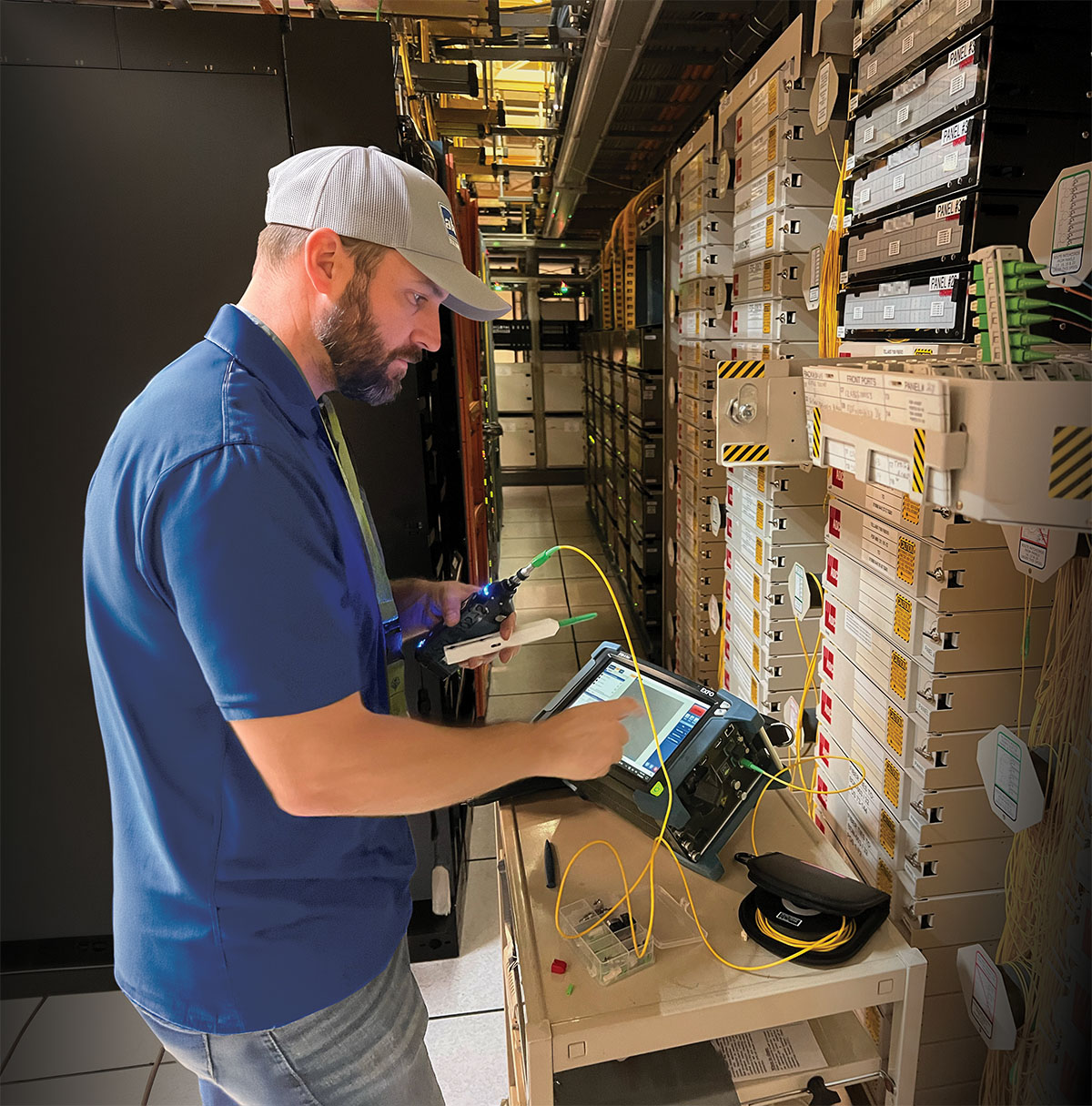
Testing and documentation help confirm that physical infrastructure is ready for service and supportable after deployment.

The Edge Still Has to Be Built

Edge data centers may be smaller, more distributed, and faster to deploy than large data center campuses. But they are not plug-and-play infrastructure.

They require planning, power, connectivity, skilled installation, testing, documentation, and field teams that understand critical infrastructure work.

For organizations evaluating edge infrastructure, that is an important point to remember. The strategy may begin with technology, but successful deployment depends on the physical layer that supports it.

Edge computing may be part of the future of digital infrastructure, but the edge still has to be built in the field.

Planning infrastructure work across critical communications, power, or edge environments? Alamon can help support the physical layer that keeps these systems connected, powered, and reliable. Contact us to start the conversation.

salesandservice@alamon.com
800.252.8838

Alamon Network Services

Organized fiber and cabling work supports long-term serviceability in critical communications, network, and edge infrastructure environments.