Why Accurate AC Load Data Matters in Telecommunications Facilities

Telecommunications facilities depend on reliable power. When utility service is interrupted, generators, batteries, rectifiers, cooling systems and other backup infrastructure must work together to keep critical communications equipment operating.

But how do facility owners know whether their backup power systems are properly sized?

The answer should begin with actual operating data.

An AC load study measures how a facility is using electrical power under real-world conditions. That information gives engineering and operations teams a more reliable basis for evaluating generator capacity, planning upgrades and preparing for future growth.

Without accurate load data, important infrastructure decisions may be based on assumptions, equipment nameplates or electrical drawings that no longer reflect the facility’s current operation.

Nameplate Ratings Do Not Tell the Whole Story

A telecommunications facility may contain a wide range of AC-powered equipment, including:

  • HVAC and ventilation systems
  • DC rectifier plants and battery chargers
  • Uninterruptible power supplies
  • Lighting and security systems
  • Fire protection equipment
  • Network and communications equipment
  • Test equipment and office loads
  • Receptacles and miscellaneous facility loads

Not all of this equipment operates at full capacity at the same time. Some loads are continuous, some cycle on and off, and others create brief but significant demand when motors or compressors start.

Depending on the facility and the purpose of the study, load monitoring may be conducted for 7 to 30 days to capture representative demand patterns, peak loads and changes in equipment operation.

An AC load study captures the facility’s actual electrical demand instead of simply adding together the maximum ratings listed on equipment labels.

Collected information may include:

  • Voltage
  • Current
  • Real power, measured in kilowatts
  • Apparent power, measured in kilovolt-amperes
  • Power factor
  • Frequency
  • Peak demand
  • Phase balance
  • Harmonic distortion
  • Motor-starting current

Together, these measurements provide a clearer picture of how the electrical system performs and what the backup power system must support.
Alamon Network Service

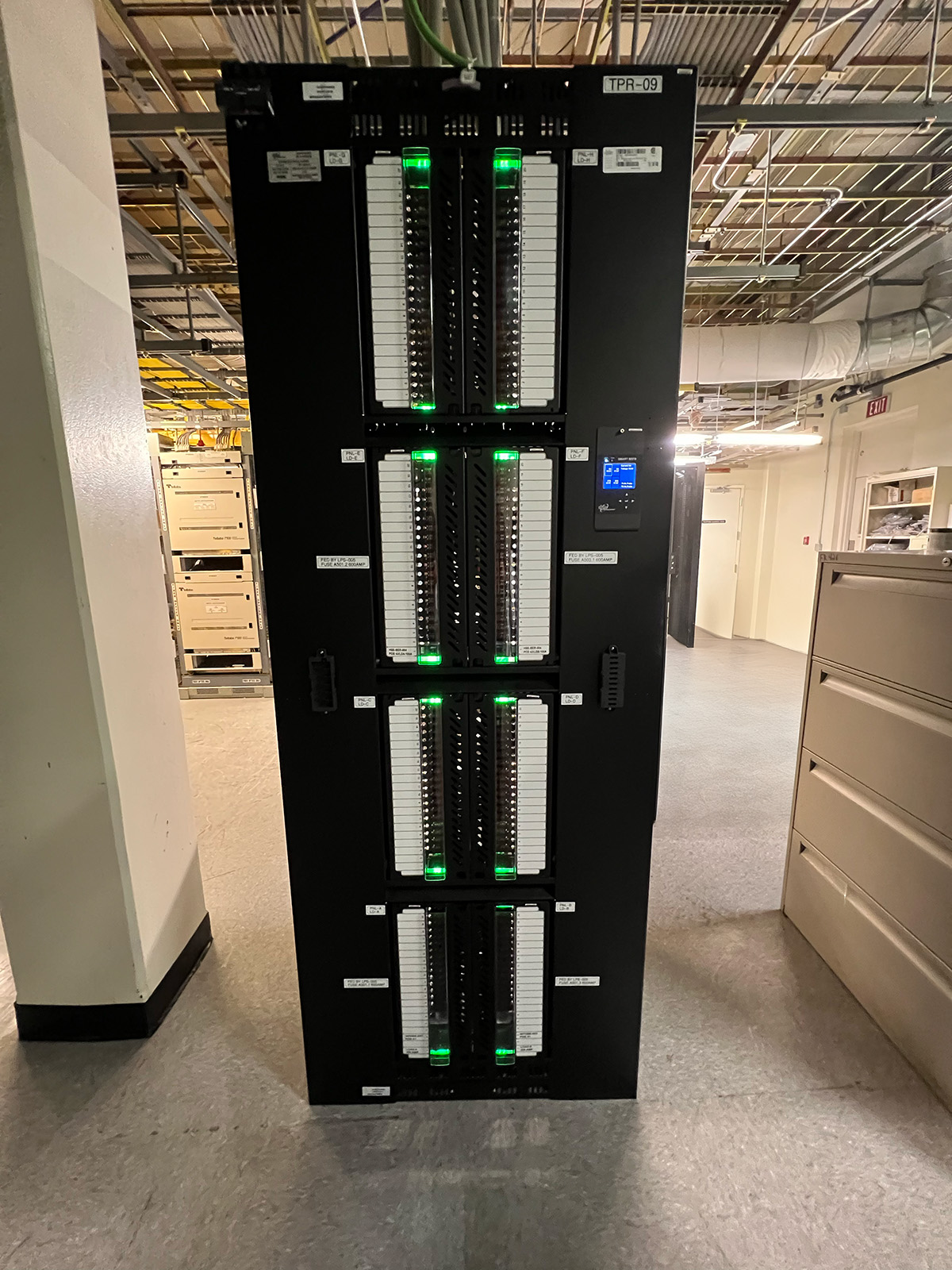
Telecommunications facilities depend on coordinated AC and DC power systems. Understanding actual AC demand helps support reliable capacity planning throughout the facility.
AC Load Study | Alamon Network Services

AC Load Monitoring – Site 1

These photos show a Fluke 1734 three-phase energy logger connected in a 3-phase wye configuration. The current on each phase is:

  • Phase A: 57.22 amps
  • Phase B: 54.88 amps
  • Phase C: 18.80 amps

Our AC load monitoring revealed a significant phase imbalance, with two phases carrying approximately three times the current of the third.

Better Data Leads to Better Generator Sizing

Generator sizing is not simply a matter of choosing a unit with a rating higher than the facility’s average electrical load.

A properly sized generator must be able to accommodate continuous demand, temporary peak loads, motor-starting currents, load sequencing and anticipated growth. It must also maintain acceptable voltage and frequency as equipment is connected during an outage.

When generators are undersized, the consequences can include overloading, voltage instability, equipment shutdowns and an inability to support critical facility operations.

Oversizing creates a different set of problems. A generator that is substantially larger than the facility requires can increase:

  • Equipment costs
  • Installation and electrical upgrade costs
  • Fuel consumption
  • Maintenance expenses
  • Long-term operating costs

Accurate AC load information helps facility owners find the appropriate balance: enough capacity to protect operations without paying for substantially more capacity than the site needs.

Existing Generator Capacity Should Also Be Verified

AC data collection is valuable even when a facility already has a standby generator.

Telecommunications sites change over time. New network equipment is installed. Rectifier capacity is expanded. Cooling requirements increase. Building systems are modified, and additional loads are connected.

A generator that was properly sized when it was installed may no longer have sufficient reserve capacity for the facility’s present-day requirements.

A load study can help answer important questions:

  • How much of the generator’s capacity is currently being used?
  • Is adequate reserve capacity available?
  • Can the system accommodate planned equipment additions?
  • Are major loads distributed and sequenced appropriately?
  • Will cooling systems remain operational during a utility outage?

Answering these questions before an emergency allows upgrades to be planned instead of performed in response to a failure.

Backup and Primary Generator Systems | Alamon, Inc.

AC Load Monitoring – Site 2

These photos show a Fluke 1734 three-phase energy logger connected in a 3-phase wye configuration. The current on each phase is:

  • Phase A: 182.5 amps
  • Phase B: 110.0 amps
  • Phase C: 99.1 amps
  • Frequency: 60.01 Hz

Three-phase load data helps identify uneven electrical demand that may affect available capacity, generator performance and future expansion planning.

AC Load Data Supports Long-Term Capacity Planning

A single electrical measurement provides a snapshot. Monitoring loads over a representative period can provide even more useful information.

Historical load data can help teams identify demand patterns, evaluate seasonal cooling loads and forecast future electrical requirements. This allows facility owners to coordinate power-system improvements with network expansion rather than discovering capacity limitations after new equipment has already been purchased or installed.

Better information can support decisions involving:

  • Generator replacement or expansion
  • Electrical service upgrades
  • HVAC improvements
  • Rectifier and battery-system additions
  • Fuel storage and emergency runtime planning
  • Capital budgeting
  • Preventive maintenance priorities

Instead of relying on estimates, decision-makers can use measured facility data to determine when investments are needed and where those investments will deliver the greatest value.

Power Monitoring Can Reveal Hidden Problems

An AC survey may also identify conditions that affect efficiency, equipment performance and system reliability.

These can include:

  • Unbalanced loading across electrical phases
  • Poor power factor
  • Excessive standby demand
  • Harmonic distortion
  • Irregular voltage or frequency
  • Inefficient HVAC operation
  • Unexpected peak loads

Some of these conditions may increase operating costs or reduce usable system capacity. Others may indicate power-quality issues that deserve further investigation.

Identifying them early gives facility teams an opportunity to address problems before they contribute to equipment failure, unplanned downtime or unnecessary infrastructure spending.

Backup and Primary Generator Systems | Alamon, Inc.
AC Load Study Services | Alamon, Inc.

AC Load Monitoring – Site 3

These photos show a Fluke 1734 three-phase energy logger connected in a 3-phase wye configuration. The current on each phase is:

  • Phase A: 18.06 amps
  • Phase B: 14.16 amps
  • Phase C: 23.09 amps

Load monitoring can also confirm that facility demand is reasonably distributed and establish a baseline for future capacity planning.

Plan Backup Power Around Facts, Not Assumptions

Reliable telecommunications infrastructure depends on more than having a generator installed. Backup power must be matched to the facility’s actual operating requirements and capable of supporting both current equipment and future needs.

Accurate AC power data gives facility owners and engineering teams the information they need to:

  • Evaluate existing generator capacity
  • Size new backup power systems appropriately
  • Reduce unnecessary capital expenditures
  • Improve emergency preparedness
  • Plan for network and facility growth
  • Identify electrical and power-quality concerns
  • Make better-informed infrastructure decisions

Alamon helps telecommunications organizations evaluate critical infrastructure in the field and develop practical information for power-system planning. By collecting and documenting actual AC operating data, facility owners can make generator and capacity decisions with greater confidence—and reduce the risks associated with designing around assumptions.

Whether you are evaluating generator capacity, planning for growth or investigating potential electrical concerns, Alamon can help you understand how your facility is actually using power. Contact us to discuss an AC load study for your telecommunications sites.

Contact:
salesandservice@alamon.com
800.252.8838

AC Load Study Services | Alamon, Inc.

AC load monitoring conducted over 7 to 30 days can reveal demand patterns that a single spot reading cannot capture, providing a stronger basis for capacity planning, generator evaluation and future infrastructure decisions.